
Parts of Elevators
Elevators are highly engineered systems that combine mechanical, electrical, and safety components to ensure smooth, reliable, and safe vertical transportation. The major parts of an elevator include:
- Hoistway (Shaft): The vertical passage where the elevator car and counterweight travel.
- Elevator Car (Cabin): The compartment that carries passengers or goods.
- Guide Rails: Metal tracks that guide the elevator car and counterweight, ensuring stability and precision in movement.
- Counterweight: A balancing system that offsets the weight of the elevator car, reducing energy consumption.
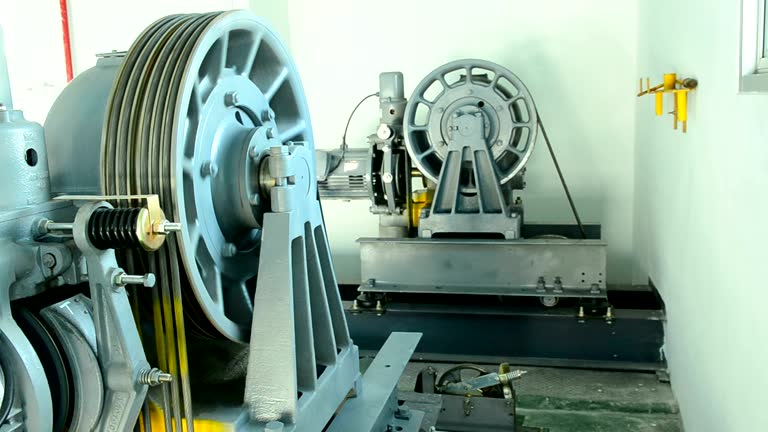
- Traction System / Ropes: Steel cables or belts connected to the car and counterweight, driven by a traction machine.
- Traction Machine (Motor & Sheave): Provides the driving force for elevator movement.
- Controller Panel: The intelligent system that manages elevator operations, speed, stops, and safety features.
- Safety Gear: Emergency braking system that activates if the car moves uncontrollably.
- Doors & Door Operators: Automatic doors at both the car and landing sides, ensuring safe entry and exit.
- Buffers: Shock-absorbing devices placed at the bottom of the shaft to cushion impact in emergencies.
- Suspension System: Ropes, belts, and pulleys that provide suspension and smooth motion.
- Drive System (Hydraulic or Traction): Determines whether the elevator uses fluid pressure (hydraulic) or traction cables for movement.
Parts of Escalators
Escalators are moving staircases designed for continuous passenger flow. Their functionality depends on a set of precisely engineered parts working together. The main parts include:
- Steps: Moving platforms designed with grooves for grip and safety.
- Step Chain: Connects and drives the steps, ensuring synchronized movement.
- Balustrade: The side structure housing handrails, providing safety and support.
- Handrail: Moving belt that passengers hold for balance while riding.
- Truss: The main supporting structure that spans between floors and holds all escalator components.
- Drive Machine (Motor): Powers the movement of steps and handrails.
- Step Demarcation Line: Yellow boundary lines on each step to enhance passenger safety.
- Comb Plate: Located at entry and exit points, guiding steps and reducing entrapment risks.
- Landing Platforms: Upper and lower ends housing the curved step chain, drive motor, and return gears.
- Track System: Guides the step wheels to maintain proper alignment and smooth movement.
- Safety Devices: Include sensors, emergency stop buttons, skirt switches, and step demarcations to prevent accidents.
- Lighting & Aesthetic Features: Under-step or balustrade lighting for safety and improved passenger experience.
Conclusion
Both elevators and escalators are complex systems designed with precision engineering to ensure safety, efficiency, and comfort. Understanding their core parts not only highlights the technology behind them but also reflects the importance of regular maintenance for long-term performance and passenger safety.